One of the most important aspects of a successful conference is the venue. A good venue should be central, accessible and comfortable.
Let’s look at eight things you should confirm before entering into a contract.
1-Access
Confirm step free access to the venue, toilets, and catering areas before booking to ensure your conference is open to all. A hotel conference venue like //tewkesburypark.co.uk/business is often ideal in terms of accessibility.
2-Transport
Are there sufficient parking spaces for all your delegates?
Additionally, check out what the public transport offer is like nearby so that people can arrive on time.
3-Capacity
A venue must be able to hold enough people for your conference.
Likewise, is there a minimum number? It’s worth checking since you may otherwise end up paying for the spaces anyway if you just have a small number of guests.
4-AV Equipment
Check out whether the venue offers AV equipment and if it’s set up on the day, for delivering presentations, speeches or showcasing products.
5-Wifi
In this digital era, it’s well worth checking if the venue has sufficient bandwidth for all delegates to go online.
6-Catering
Ensure your venue can meet various dietary requirements, e.g., gluten-free options.
7-Breakout Rooms
If you’re planning breakout discussions or simultaneous workshops, breakout rooms are essential.
8-Sound
Lastly, ascertain the venue’s acoustic quality: this can make all the difference to the sound quality during presentations.
Planning the event before you book
Checking the contract is the last step in a longer planning process, and the earlier decisions shape what you need from a venue. A business conference usually moves through a clear sequence: researching the topics to be covered, setting the agenda, deciding which members of the business community should take part, sending invitations and finally running the event itself.
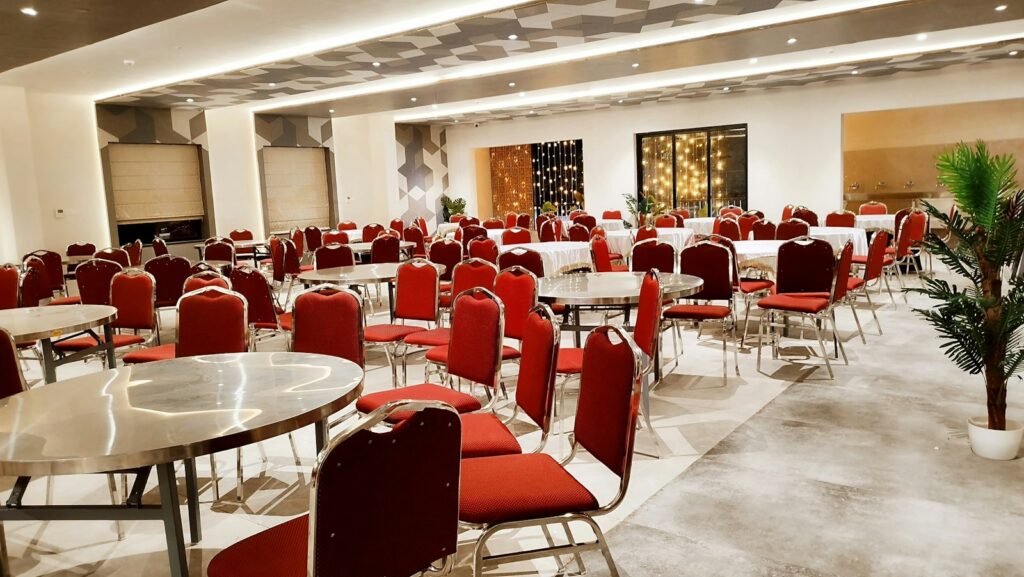
When it comes to the venue, there may be several that look suitable, so judge each one by whether it will help the conference achieve a positive outcome for your business. Make sure the running costs fit within your budget and that the facilities are right for the kind of event you are hosting.
Once the venue is settled, put time into thorough research on the subjects to be discussed. A well prepared agenda gives speakers and guests a reason to attend, and it helps you judge how much space, equipment and time each session will need.